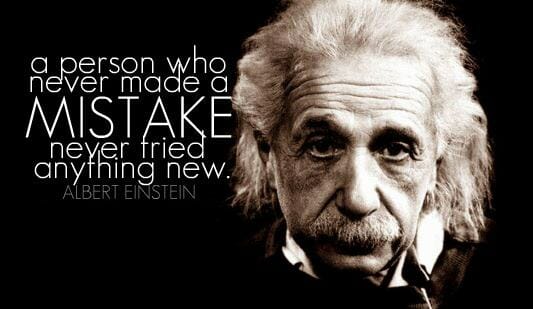

The Value of Embracing Mistakes in Leadership & Learning
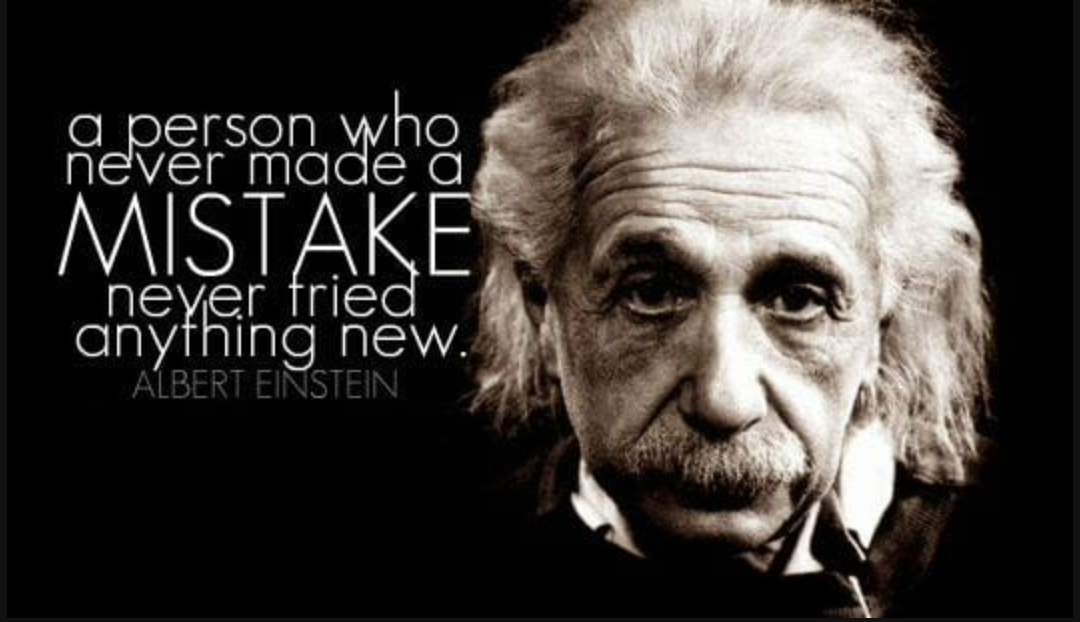
It’s often unwelcome and uncomfortable, but it’s a reality of being human; we all make mistakes. What distinguishes between a strong or weak leader is how that leader manages mistakes when they are made. As we move through the material in this class, it will be a frequently revisited theme. Not only are we are going to consider how embracing mistakes can help result in both better leaders and more effective team environments, but we will also look at how this impacts learning overall. That starts with how we are going to learn in this class. Actually, it starts with how we - I as the instructor and you as the student - think about and approach your learning journey in this class.
In their publication The Value of Mistakes: A Pathway to Experience and Wisdom, Rasulova and Abbasov provide their findings on the value of mistakes in leadership:
“In leadership positions, in particular, the ability to process and grow from errors is critical. Kolodinsky and Bierly (2013) argue that strategic wisdom in leadership stems from the capacity to reflect on past failures and integrate that knowledge into future decision-making processes. Leaders who approach mistakes with humility and an open mind are more likely to foster innovation and adaptability within their teams. By creating an environment where mistakes are seen as learning opportunities rather than career-ending failures, leaders can encourage creativity, risk-taking, and continuous improvement.”
Simon Sinek discusses how using feedback can be used to build a psychologically safe culture.
As we move forward, we will be looking more closely at what it means to have a mindset that is open to making and learning from mistakes, and explore how leaders can help create an environment where team members don’t fear making them. As an important element, we will spend in-depth time on the process of providing and receiving feedback - the good and the challenging - as a positive mechanism for continuous improvement.
Here are some of the ways we will work towards a learning mindset in this class:
When it comes to learning, innovation or growth, we will work to understand how there can be more value in considering what we did wrong than from what we did right. After all, if new tasks were so easy that you did them perfectly right off the bat, then they were unlikely to be challenging, new or innovative. That leaves questions whether they really provided much value at all.
We will adopt the concept of “yet.” When taking on new and challenging tasks, of course you aren’t going to master them right away. The key is to understand that not succeeding right away isn’t failure…it’s that you have not mastered the tasks…yet.
We will work to shift ownership of the learning journey from me as the instructor to you as the student. Research has demonstrated that some of the greatest learning comes from you as the student actively reflecting on your work. Not only are we going engage in techniques for you to consider and continuously improve on your own work, but we are also going to learn how to provide useful, constructive information to others, providing feedback, or even better feedforward that considers what worked, and what might be done better so that you and your peers can support each other in continuous improvement and learning. We will learn more about what this looks like as we progress through the material, and learn to use it in practical terms.
Well, that provides a bit of framework going forward. I look forward to working with you all, and maybe even receiving your feedforward on how I can continuously improve your learning environment!
References
Dweck, C. (2015). Developing a growth mindset [Video]. YouTube. https://www.youtube.com/watch?v=hiiEdMN7vbQ
Harapnuik, D. (2021, Feb 9). Learner’s Mindset Explained. It’s about learning: Creating significant learning environments. https://www.harapnuik.org/?p=8705
Rasulova, S., Abbasov, N. (2024). The value of mistakes: A pathway to experience and wisdom. EuroGlobal Journal of Linguistics and Language Education, 1(1):151-157. https://doi.org/10.69760/wqqxn976
Sinek, S. (2025). Why feedback matters: Simon Sinek on growth, honesty and leadership [Video]. YouTube. https://www.youtube.com/watch?v=82AwRZp1eag
Wehmeyer, B. (2026). Image with quote by Albert Einstein. Brent Wehmeyer. http://brentwehmeyer.com/wp-content/uploads/2013/10/a-person-who-never-failed-Einstein-quote.jpg